
Incoming Leaders
Celebrating New Ministry Leadership
The Free Methodist Church in Southern California celebrates God’s work in raising up new leaders to guide our congregations and ministries. This page honors those who have completed significant milestones in their ministry journey and will be recognized during Annual Conference 2025. These faithful servants represent the ongoing story of God’s leadership provision from generation to generation.
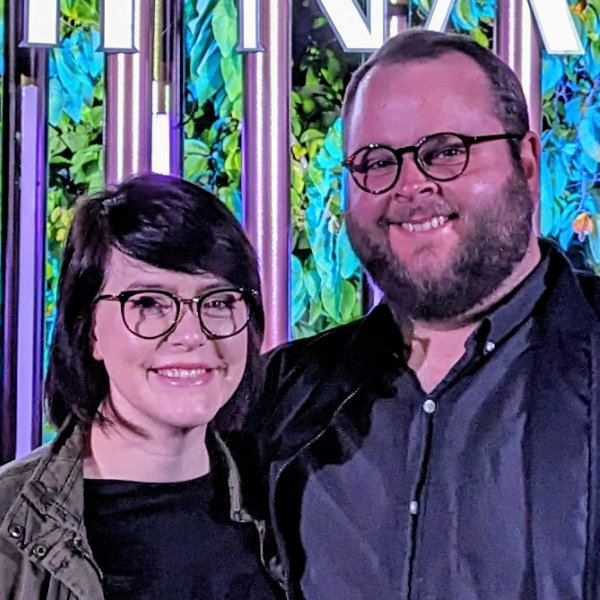
Brian Scott
I can’t point to a single moment when I was “saved,” but I do know when the reality of Christ captured my heart. Growing up in the cultural Christianity of the rural South, identifying as a Christian was simply what people did. But in college, during a philosophy class filled with skeptics—including the professor—I suddenly became the outlier. Claiming to be a Christian came with questions I wasn’t prepared to answer. That realization forced me into a decision: either abandon the label or search for truth. So I went deep. I read the Quran, the Bhagavad Gita, and the writings of Nietzsche, Russell, Hitchens, and Dawkins. Then I turned to Augustine, Aquinas, Kierkegaard, Lewis, and Keller—and eventually Scripture itself. What I found was both intellectually satisfying and personally stunning. The gospel wasn’t just true; it was beautiful. It mapped onto the world with a coherence I hadn’t expected and offered a vision of creation and humanity more profound than anything else I had encountered. That’s when I fell in love with Jesus—not as an abstract idea, but as the living Christ who redefined reality. Everything became, as Lewis might say, “a little enchanted.”
How did the Spirit guide you to your current ministry and what has God called you to do through your ministry?
It’s been a winding road, but one filled with clarity in hindsight. Once I truly grasped the beauty of the gospel, I felt an overwhelming desire to immerse myself in it—to study, teach, and share the story that had so deeply transformed me. Early on, I thought that passion pointed to academia and philosophy. But it was my wife, Haley, who first recognized the sense that God might be calling me into pastoral ministry. Others began echoing the same encouragement, and over time I realized that what I was scared to acknowledge, pastoral calling, was actually what I had been working toward all along; to walk closely with others, shepherding them toward Christ. I’ve come to believe that calling is most authentically discerned in community, and in every place we’ve served, people have spoken into that call. The Spirit has guided me through study, conversations, and countless moments of simply loving and being present with people. My deepest sense of calling is to help others encounter the wonder of God’s story and see themselves as beloved image-bearers within it—to teach in ways that bridge beauty and truth, intellect and soul, the head and the heart. This journey of mine, from intellectual faith to pastoral calling, required moving from knowledge to relationship, from fear to love, and I feel honored to be called to a grand narrative greater than any of us could have dreamed.
How did you come to first be involved with the Free Methodist Church and why have you chosen to continue your ministry in the Free Methodist Church?
My path to the Free Methodist Church wasn’t direct. Having served in Baptist, Presbyterian, Non-Denominational, and Anglican settings, Haley and I were searching for a denominational home that resonated with our theological convictions when we moved to California. What drew us to the Free Methodist Church was its commitment to the “Via Media”—a middle way that refuses easy categorization. In a polarized world, I’ve found Free Methodism cuts across conventional divides, maintaining orthodoxy while embracing justice, valuing tradition while remaining responsive to the Spirit. Not being simply “in the middle” on every topic, but taking stands that cut across cultural and political structures and groups. We’ve stayed because Free Methodism represents something increasingly rare: a theological tradition that takes seriously both personal holiness and social witness, that values intellectual rigor and emotional authenticity, that seeks to be neither so embedded in tradition that it fears the Spirit’s movement nor so enamored with novelty that it forgets its roots. Our denomination’s commitment to life-giving holiness, love-driven justice, Christ-compelled multiplication, cross-cultural collaboration, and God-given revelation provides a framework that feels like home and a group of people that have become family.